



Paul prays. We find samples of his prayers in his letters. From this we can deduce what was important to him. Pronounced as a prayer, this also indicates that he sought help from God to realize these concerns. By writing down the prayers, he wants to make it clear what is important to him, but at the same time make it clear that these requests are also part of his regular prayers. You can deduce from this what is important to him and where he stands in his understanding of faith.
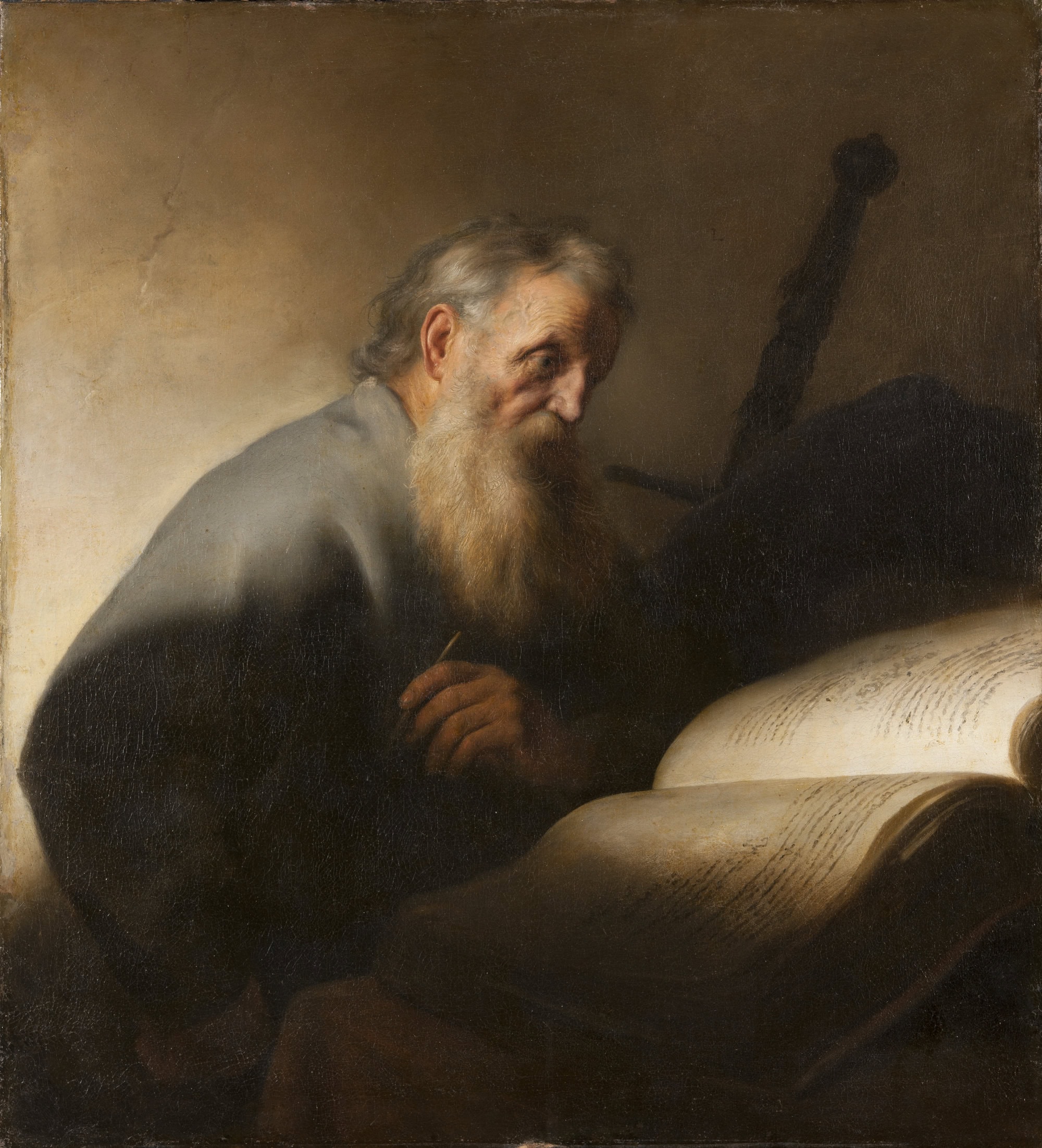
Painting of St. Paul the Apostle, created by Jan Lievens in Leiden, Netherlands, around 1627-1629.
The first prayer
From Ephesians 1:15 we find the apostle’s first written prayer in the letter to the Ephesians. He prays on the basis of the content of faith with which he, Paul, was made known (Eph 1:15). He is now communicating this to the congregations to which he is addressing this letter. Ever since he heard about this content of faith, this “article of faith”, he has not stopped …
“To give thanks for you and to mention you in my prayers.”
Eph 1:16
Then he drives on and a lengthy prayer follows. It’s not worship and it’s not Bible study. In this prayer, he mentions what he thanks and asks God for. Paul mentions concrete things. He has heard something that is important for the Ephesians. He was touched by this message. Since hearing this, the apostle has been giving thanks and praying. He mentions the accepted readers of his letter and prays:
“That the God of our Lord Jesus Christ, the Father of glory, may give you spiritual wisdom and spiritual revelation for the knowledge of Himself (after the eyes of your heart have been enlightened).”
Eph 1:17-18
First of all, he asks that God may be recognized according to his nature. Amazingly, the apostle prays this for the believers. This is not about unbelievers, for which Paul prays that they may now “finally recognize God in faith”. That would not only be very arrogant, it also has nothing to do with what he writes here. But praying his prayer for believers, isn’t that strange? Believers know God, don’t they? Or is it?
Paul prays for spiritual wisdom and spiritual revelation – for the knowledge of Himself. Recognizing God is what it’s all about. More precisely: it is about recognizing God himself. This seems to be more than a superficial description. Recognizing God Himself requires spiritual wisdom and spiritual revelation. That is why Paul is addressing believers. This can be effective for them.
“Spiritual wisdom and spiritual revelation for the knowledge of Himself.” This is no ordinary wisdom. It does not seem to be the case that one simply recognizes the nature of God in passing. Elsewhere Paul mentions: “But God reveals it to us by His Spirit, for the Spirit searches all things, even the depths of God” (1 Corinthians 2:10). This suggests that God’s Spirit makes this spiritual wisdom and spiritual revelation possible. That’s the only way. We can also think of the letter to the Romans, in which Paul explains: “For you did not receive the spirit of slavery, again to fear; but you received the Spirit of sonship, in whom we cry aloud: Abba, Father! – The Spirit himself bears witness with our spirit that we are children of God” (Romans 8: 15-16).
Knowing God is only possible when God’s spirit “speaks” to our spirit. Spiritual discernment goes from spirit to spirit. Not from spirit to soul. Knowledge is given to us by God and brought about in us. Paul adds in his prayer: “after the eyes of your heart have been enlightened”. Our seeing and recognizing, says Paul, needs an upgrade. Eyes must be enlightened! The way we see must become spiritual. We must learn to recognize God in order to be able to view the world from this perspective.
In the third chapter of Ephesians we find another prayer written down. There, Paul mentions that God may give us “strength through His Spirit to stand firm in the inner man” (Eph 3:16). This is also a reference to the effect of God’s spirit.
God’s spirit does not work “magically” for some unknown reason, as a tangible force, as a feeling. It is “spiritual” because it is borne by the spirit. This is an effect that stands for itself. Spiritual wisdom and spiritual revelation enable us to recognize God in essence. The self is central to this process. It is not about us or about special effects that are promised to us, but it is about recognizing God Himself in His essence. His concerns, His expectations, His work, His outlook all speak of Himself. This is what the next few verses are about.
How do I recognize spiritual wisdom?
What Paul writes requires the influence of God’s Spirit. We need spiritual wisdom and spiritual revelation. This “spiritual” has to do with our spirit. It must arrive there so that we can recognize it as spiritual wisdom. It is the wisdom we need that is “spiritually” shaped. It is a matter of a spiritually effective allocation and revelation. How to recognize this? As already noted, it is not a feeling. You can’t wake up one morning and think “now I’m spiritually wise”. That’s not how it works. How can we tell?
Paul shows us how. Once he had recognized what was important for the churches, he did not stop giving thanks for them and mentioning them in his prayers. Spiritual wisdom is expressed in thanksgiving and prayer. It becomes visible in the effort to make others equally happy. In other words, you have internalized God’s concerns and have His goals in mind. We are now guided by this and align our actions and attitude accordingly.
What we should know
Why does Paul ask all this?
“So you know.”
Eph 1:18
Spiritual wisdom and spiritual revelation for the knowledge of God were the basis. But now it continues. Paul mentions three things that we should know:
- “What is the expected good of His calling, and
- What the riches of the glory of His lot in the midst of the saints, and
- Which is the all-surpassing greatness of His power (for us who believe).”
Eph 1:18-19
The apostle formulates three things as a goal for the churches. These are things they should recognize. The expectation of God’s calling is a recognition of what lies ahead of us and what we are called to do. Secondly, Paul speaks about the riches of the glory of God’s lot in the midst of the saints. This generally refers to believers (cf. Rom 1:7). The “riches of glory” deserve an essay of their own. Paul does not explain this here, but mentions it as something that happens “in the midst of the saints”. That is where this wealth of glory is to be found: In the church. Thirdly, the apostle mentions that the believers should recognize what the all-surpassing greatness of God’s power is, especially for the believers.
Three things are mentioned. Each of these things can be explained further. But if you look at the overall impression of this prayer, he mentions these things together. This contains an overflowing wealth. Paul mentions not one but three things. It goes a. the expectation that was given to us, b. for God’s glory within the church and c. for His strength for the believers. You could also say that Paul mentions three themes: the prospect of faith, the richness of fellowship in God’s presence and the greatness of God’s power.
Beginning with the outlook, the apostle speaks of fellowship in God’s presence and finally of the power of God. Those who understand God’s nature and work, which requires spiritual wisdom and spiritual revelation, can experience the richness of God’s glory in the community and God’s power in personal life from a confident outlook of faith.
This is what the municipalities should know. That is why he mentions this in a prayer, so that God himself may grant this in the churches. Afterwards, Paul can work this out and deepen it for the building up.